Introduction
Chemical processing facilities face constant challenges from corrosive environments that rapidly degrade conventional metal walkways. An FRP platform walkway for chemical plant applications offers a superior alternative, combining exceptional corrosion resistance with high structural strength and long service life. These fiberglass-reinforced plastic platforms provide safe, durable access solutions in areas where steel would fail within months due to chemical attack.
Fiberglass grating walkways have become the standard choice for chemical plant flooring, catwalks, and platform systems worldwide. Unlike traditional materials, FRP (Fiber-Reinforced Polymer) does not rust, rot, or chemically degrade when exposed to acids, alkalis, solvents, and other aggressive substances commonly found in industrial processing environments.
This comprehensive guide explores everything you need to know about FRP walkway systems for chemical plant installations — from chemical resistance properties and safety benefits to installation methods and long-term cost advantages. Whether you are designing a new facility or upgrading existing infrastructure, understanding the capabilities of fiberglass walkway systems will help you make an informed decision for your chemical processing operations.
What Is an FRP Platform Walkway for Chemical Plants?
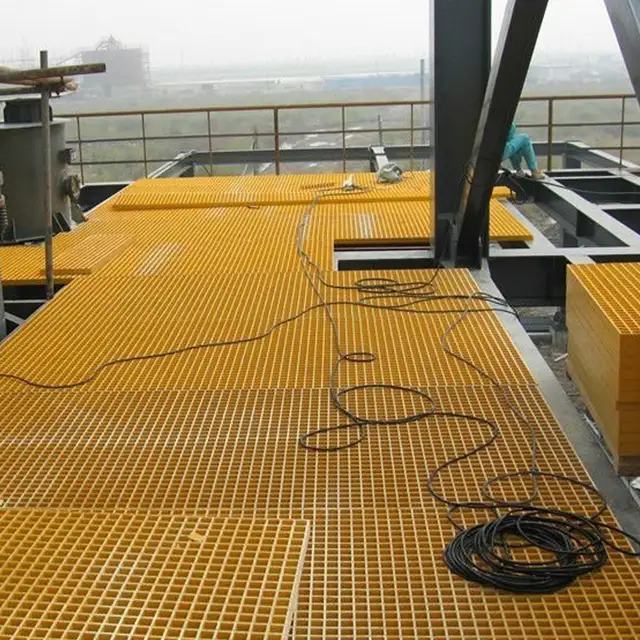
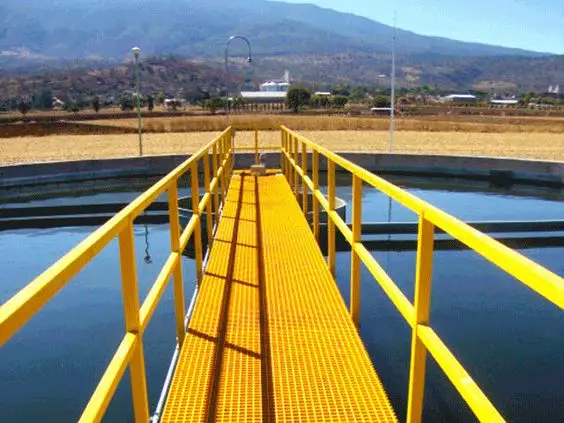
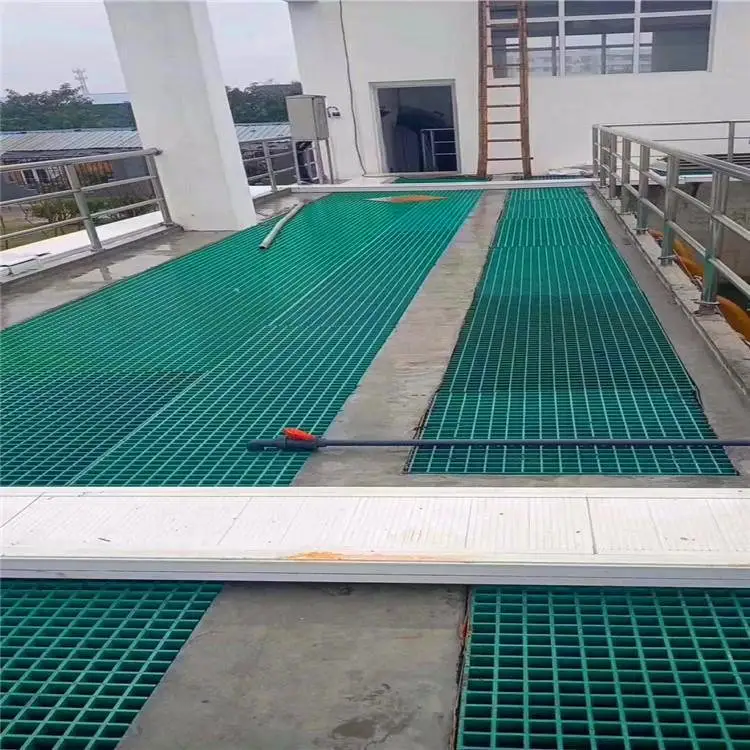
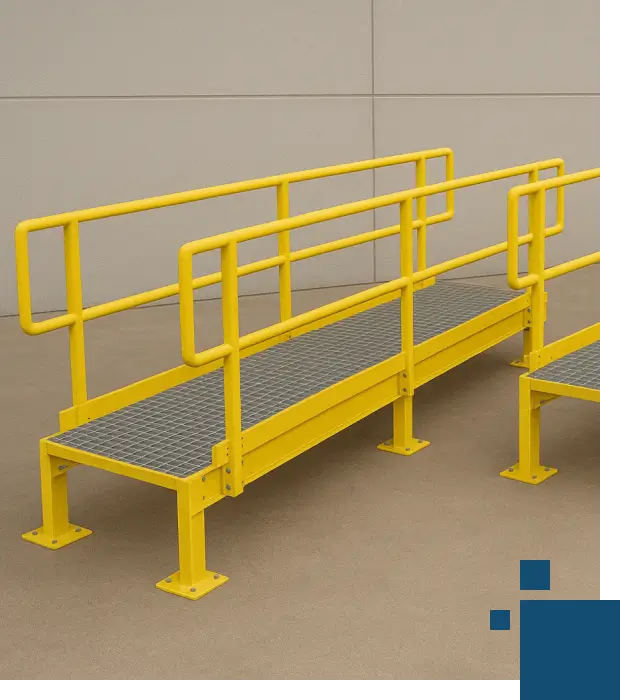
An FRP platform walkway is a structural access system made from fiberglass-reinforced polymer composites designed specifically for chemical processing environments. These walkways consist of pultruded or molded grating panels supported by FRP structural beams, handrails, and fittings, all engineered to withstand harsh chemical environments while providing safe personnel access.
Typical Construction and Materials
FRP platform walkways are manufactured using two primary methods: pultrusion and compression molding. Pultruded grating offers high strength-to-weight ratio with continuous longitudinal fibers, making it ideal for long-span applications. Molded grating provides uniform strength in all directions and is typically more economical for standard walkway installations.
The resin system determines the chemical compatibility of the walkway. Common options include:
- Isophthalic polyester resin — General-purpose chemical resistance for mild acidic and alkaline environments
- Vinyl ester resin — Superior resistance to strong acids, bleaches, and oxidative chemicals
- Epoxy resin — Excellent adhesion and chemical resistance for specialized applications
- Phenolic resin — Fire-resistant formulation with low smoke emission for high-temperature areas
For chemical plant environments, FRP grating for chemical plant walkways is typically specified with vinyl ester resin to ensure maximum protection against the broad spectrum of chemicals encountered in processing operations. The best FRP grating for chemical plant applications combines a corrosion-resistant resin with a grit-coated surface for slip resistance.
Key Chemical Resistance Properties of FRP Materials
Understanding the chemical resistance properties of FRP materials is essential when selecting walkway systems for chemical plant environments. The corrosion resistance of FRP comes from its resin matrix, which forms a protective barrier against chemical attack while the glass fibers provide structural reinforcement.
Chemical Resistance Ratings
FRP materials are tested according to ASTM C581 standards to determine their suitability for specific chemical exposures. The following table shows typical chemical resistance ratings for common FRP resin systems used in chemical plant walkways:
| Chemical | Concentration | Vinyl Ester | Isophthalic Polyester | Temperature (°F) |
|---|---|---|---|---|
| Sulfuric Acid | 50% | Excellent | Good | 200 |
| Hydrochloric Acid | 37% | Excellent | Good | 180 |
| Sodium Hydroxide | 25% | Excellent | Fair | 150 |
| Chlorine (Wet) | Saturated | Excellent | Not Recommended | 160 |
| Benzene | 100% | Good | Not Recommended | 100 |
The chemical resistance ratings depend heavily on the resin selection, curing process, and glass content. Vinyl ester resins typically provide the broadest resistance across acids, alkalis, and organic solvents, making them the preferred choice for multi-chemical environments in processing plants. Products from a reliable FRP grating for chemical plant - SMC Tank Manufacturer will typically offer detailed chemical compatibility charts specific to their resin formulations.
Factors Affecting Chemical Resistance
Several factors influence how well an FRP walkway performs in corrosive chemical environments:
- Resin-to-glass ratio — Higher resin content improves the chemical barrier at the surface
- Curing quality — Properly cured resin achieves maximum cross-linking density for better chemical resistance
- Veil material — A C-glass or synthetic veil on the surface prevents capillary wicking of chemicals along glass fibers
- Temperature — Higher temperatures accelerate chemical attack; each resin system has a maximum service temperature
- Chemical concentration — Higher concentrations require more resistant resin systems
FRP Platform Walkway vs Steel in Chemical Environments
One of the most common questions engineers ask is why choose FRP walkways over traditional steel grating in corrosive environments. The answer lies in the fundamental differences between how these materials behave in chemical plants.
Corrosion Resistance
Steel grating in chemical plants requires continuous maintenance — regular painting, epoxy coatings, and galvanizing to slow the inevitable corrosion. Even stainless steel, while more resistant, can suffer from chloride stress corrosion cracking in certain chemical environments. An FRP platform walkway for chemical plant installations eliminates corrosion concerns entirely. FRP does not rust, oxidize, or chemically react with most industrial chemicals, making it inherently maintenance-free in corrosive settings.
Weight and Installation Advantages
FRP grating weighs approximately 75% less than steel grating of equivalent strength. This significant weight reduction translates to:
- Lower structural support requirements for the building framework
- Reduced shipping and handling costs
- Faster installation with smaller crews and lighter lifting equipment
- Simpler modifications and repairs during facility retooling
Total Cost of Ownership
While the initial purchase price of FRP grating for chemical plant walkways may be comparable to or slightly higher than steel, the total cost of ownership dramatically favors FRP. Studies from the chemical processing industry show that FRP walkways save 30–50% over steel when considering the full lifecycle costs including maintenance, replacement, and production downtime.
A fiberglass grating walkway for chemical plant installations typically lasts 15–25 years with minimal maintenance, while steel grating in similar environments often requires replacement every 3–7 years due to corrosion damage. The longevity advantage alone makes FRP the economically superior choice for permanent chemical plant infrastructure.
Common Applications in Chemical Processing Facilities
Chemical processing facilities utilize FRP walkway systems across numerous applications. The versatility of fiberglass composites makes them suitable for everything from light-duty inspection walkways to heavy-load bearing platforms.
Walkways Around Chemical Storage Tanks
Bulk chemical storage tanks require perimeter access for inspection, sampling, and maintenance. FRP platform walkways around tank farms offer excellent resistance to chemical spills and fumes that accumulate in these areas. The non-conductive nature of FRP also eliminates galvanic corrosion concerns when connecting to stainless steel or aluminum tank components.
Processing Floor Platforms and Catwalks
Inside chemical processing buildings, FRP catwalks provide access between reaction vessels, distillation columns, and filtration equipment. These platforms must withstand not only chemical exposure but also thermal cycling, vibration, and heavy equipment loads. The best FRP grating for chemical plant processing areas combines high strength with fire-retardant additives when required by building codes.
Pipe Rack Walkways
Pipe racks in chemical plants carry process piping, steam lines, and utility conduits. FRP walkways installed along pipe racks allow maintenance personnel to safely access valves and flanges. The lightweight nature of FRP grating means less load on the pipe rack structure itself, a significant advantage when retrofitting existing racks.
Water and Wastewater Treatment Access
Chemical plant wastewater treatment areas present particularly aggressive environments with fluctuating pH levels, chlorinated compounds, and biological growth. FRP grating for chemical plant walkways in treatment areas provides long-term service without the deterioration seen in steel or concrete alternatives.
Loading Dock and Material Handling Platforms
Areas where chemicals are loaded, unloaded, and transferred require flooring that can handle both chemical spills and heavy traffic. FRP platform walkways in loading areas provide the durability and corrosion resistance needed for these demanding applications.
Safety Standards and Compliance Requirements
Safety is paramount in chemical processing environments, and FRP walkway systems must meet stringent regulatory requirements. Understanding the applicable safety standards ensures your walkway provides reliable protection for personnel working in hazardous areas.
OSHA and ANSI Standards
In the United States, FRP platform walkways in chemical plants must comply with OSHA 1910 Subpart D (Walking-Working Surfaces) and ANSI A1264.1 safety requirements. These standards specify minimum load capacities, guardrail heights, toe board requirements, and slip resistance values for industrial walkways.
Slip Resistance and Anti-Skid Surfaces
Chemical plant environments frequently involve wet floors, chemical spills, and process liquids that create slip hazards. FRP grating walkways address this with integrated anti-skid surfaces:
- Grit-coated top surface — Silica or aluminum oxide particles embedded in the resin provide continuous slip resistance exceeding OSHA minimums
- Concave surface grating — Molded-in texture channels fluids away from foot traffic areas
- Grit-filled resin top coat — Factory-applied textured surface that lasts the lifetime of the panel
Non-Sparking and Electrical Safety
Chemical plants handling flammable solvents, gases, or dusts require non-sparking walkway materials. FRP is inherently non-sparking, eliminating ignition risks from tool drops or foot traffic impacts. Additionally, FRP offers excellent electrical insulation properties, protecting personnel from electrical hazards in areas with exposed wiring or static-sensitive equipment.
Fire Resistance and Smoke Ratings
Many chemical plant applications require walkways with specific fire performance characteristics:
- ASTM E84 Class 1 (Class A) — Flame spread index of 25 or less for interior applications
- Phenolic FRP — Low smoke generation and minimal flame spread for enclosed spaces
- Fire-retardant additives — Halogenated or phosphorus-based additives can be incorporated into the resin formulation
When specifying an FRP walkway for chemical plant safety systems, always verify that the manufacturer provides third-party test reports confirming compliance with applicable fire and safety standards for your specific facility location and application.
Installation Considerations for Chemical Plant Walkways
Proper installation is critical to the long-term performance of FRP walkway systems in chemical plants. While FRP is easier to handle than steel due to its lighter weight, there are specific considerations unique to composite material installation in chemical processing facilities.
Support Structure Preparation
FRP platform walkways require a properly designed support structure, typically fabricated from FRP structural shapes (I-beams, channels, or tubes) to maintain corrosion resistance throughout the entire system. When attaching FRP to existing steel supports, dielectric isolation is essential to prevent galvanic corrosion. Stainless steel or FRP bolts and clips should be used for all connections.
Cutting and Field Modifications
FRP grating can be cut to size on-site using standard power tools with carbide-tipped blades. Key installation guidelines include:
- Use dust collection or wet cutting methods to control fiberglass dust exposure
- Wear proper PPE including respiratory protection during cutting operations
- Seal all cut edges with the same resin system used in manufacturing to maintain chemical resistance
- Drill fastener holes slightly oversize to accommodate thermal expansion
Fastening Systems
Proper fastening prevents walkway movement under load while allowing for thermal expansion and contraction:
- FRP clips and brackets — Corrosion-resistant fastening that maintains chemical resistance integrity
- Stainless steel hardware — Grade 316 stainless steel for maximum corrosion resistance in chemical environments
- Hold-down clips — Every panel should be secured with a minimum of four clips on each support bearing bar
Thermal Expansion Considerations
FRP has a higher coefficient of thermal expansion than steel, approximately 2–3 times greater. When installing FRP grating for chemical plant walkways, expansion gaps of 1/8 to 1/4 inch per 10 feet of length should be provided at panel ends and around fixed obstructions. Slotted bolt holes allow for movement without stressing the fastening points.
Installation Sequence Best Practices
For complex chemical plant walkway installations, the recommended sequence is:
- Install primary support beams and verify level and alignment
- Position FRP grating panels starting from the fixed end of the structure
- Secure each panel with temporary clips before final alignment
- Install handrails and guardrails per OSHA requirements
- Apply cut-edge sealant to all field-modified panel edges
- Conduct load testing and safety inspection before putting into service
Longevity and Durability in Corrosive Environments
One of the most frequently asked questions about FRP walkways in chemical environments is their expected service life. An FRP platform walkway for chemical plant installations can last 15 to 25 years or more when properly specified and maintained, significantly outperforming steel and aluminum alternatives in corrosive environments.
Expected Service Life by Environment
The longevity of FRP walkways varies by exposure conditions:
| Environment Type | FRP Service Life | Steel Service Life | Maintenance Required |
|---|---|---|---|
| Mild chemical exposure | 20–25+ years | 5–10 years | Minimal (FRP) / Frequent (steel) |
| Moderate chemical exposure | 15–20 years | 3–7 years | Periodic inspection (FRP) / Constant (steel) |
| Severe chemical exposure | 10–15 years | 1–3 years | Regular monitoring (FRP) / Ongoing replacement (steel) |
| High-temperature + chemicals | 8–12 years* | 1–2 years | Resin-dependent (FRP) / Continuous (steel) |
*With appropriate high-temperature resin selection
Factors That Extend Service Life
To maximize how long an FRP walkway lasts in corrosive chemical environments, consider these factors during specification:
- Resin selection — Matching the resin system to the specific chemical exposure profile is the single most important factor for longevity
- UV protection — For outdoor installations, UV inhibitors or a gel coat layer prevent surface degradation from sunlight exposure
- Proper drainage — Designing the walkway with adequate slope prevents standing liquids from accelerating surface wear
- Veil materials — A synthetic veil on exposed surfaces prevents capillary wicking and chemical penetration along fiber paths
- Quality manufacturing — Consistent curing, proper fiber wet-out, and verified resin-to-glass ratios ensure uniform performance
Inspection and Maintenance
While FRP requires dramatically less maintenance than steel, periodic inspection helps identify potential issues before they compromise performance. Annual inspections should check for:
- Surface erosion or fiber exposure at high-traffic areas
- Fastener condition and torque retention
- Signs of chemical attack or softening at the resin surface
- Structural deflection or deformation under normal loads
Cost Analysis: FRP Platform Walkway Investment vs Long-Term Value
Understanding the cost of FRP walkway installations in chemical plants requires looking beyond the initial purchase price to the total lifecycle cost. While many facility managers focus on upfront expenditure, the long-term economic picture strongly favors FRP over traditional materials in corrosive environments.
Initial Material Cost Comparison
The upfront cost of FRP grating for chemical plant walkways varies based on resin type, grating style, load rating, and surface finish:
- Molded FRP grating (isophthalic polyester) — $15–25 per square foot
- Molded FRP grating (vinyl ester) — $20–35 per square foot
- Pultruded FRP grating — $25–45 per square foot
- Steel grating (galvanized) — $12–20 per square foot
- Stainless steel grating — $35–60 per square foot
While standard steel grating has a lower initial cost, the comparison changes dramatically when stainless steel is required for corrosion resistance. Vinyl ester FRP grating is typically 30–50% less expensive than 316 stainless steel grating with equivalent corrosion resistance.
Lifecycle Cost Analysis
When calculating the total cost of ownership for an FRP platform walkway for chemical plant, the following factors significantly reduce the long-term expenditure:
- Zero corrosion maintenance — No painting, coating, or galvanizing required throughout the service life
- No replacement cycles — FRP lasts 3–5 times longer than steel in chemical environments, eliminating recurring replacement costs
- Reduced installation cost — 75% lighter weight means faster installation, smaller crews, and lighter support structures
- Minimal production downtime — Quick installation and no maintenance shutdowns mean less interruption to chemical plant operations
- Safety cost savings — Fewer slip-and-fall incidents and no corrosion-related structural failures reduce liability and insurance costs
Return on Investment Timeline
For a typical chemical plant FRP walkway installation, the return on investment through avoided maintenance and replacement costs is typically achieved within 3–5 years. After this point, the FRP walkway continues to deliver value with minimal ongoing expense. Over a 20-year period, the total cost savings compared to steel grating in a corrosive chemical environment typically range from 40% to 60%.
Conclusion
An FRP platform walkway for chemical plant applications represents the optimal solution for facilities demanding corrosion resistance, safety, and long-term value. From the excellent chemical resistance properties of vinyl ester resins to the lightweight installation advantages over steel, FRP walkway systems deliver measurable benefits that directly impact plant productivity and operational costs.
When selecting an FRP walkway system, work with experienced manufacturers — whether a specialized FRP grating for chemical plant - SMC Tank Manufacturer or a full-service FRP fabricator — who can help specify the correct resin system, grating type, and structural design for your specific chemical exposure conditions. Proper material selection, combined with correct installation practices, will ensure your FRP walkway provides safe, reliable service for decades.
The best FRP grating for chemical plant facilities combines proven corrosion resistance with compliance to safety standards, appropriate load ratings for the expected traffic, and anti-slip surface treatment for personnel protection. By choosing FRP over traditional materials for chemical plant walkways, you invest in infrastructure that performs better, lasts longer, and costs less over its service life.
Contact our engineering team today to discuss your chemical plant walkway requirements and discover how our FRP platform solutions can improve safety and reduce maintenance costs in your facility.