Introduction
Offshore platforms operate in one of the most corrosive environments on earth. Constant exposure to saltwater spray, high humidity, wave impact, and chemical cleaning agents creates a relentless assault on every structural component. For decades, steel grating was the default choice for platform walkways, mezzanines, and drainage covers — but the cost of corrosion has driven the industry to seek better alternatives.
Corrosion resistant FRP grating for offshore platform applications has emerged as the superior solution, offering exceptional durability in marine environments while eliminating the rust and coating failures that plague steel. This article examines why FRP (Fiberglass Reinforced Plastic) grating outperforms steel in offshore applications, covering the science behind its corrosion resistance, structural performance, lifecycle economics, and real-world installation case studies.
Whether you are specifying materials for a new offshore oil platform, retrofitting an aging structure, or designing a wind farm access system, understanding the advantages of corrosion resistant FRP grating will help you make a cost-effective, long-lasting decision.
What Is Corrosion Resistant FRP Grating for Offshore Platform Applications?
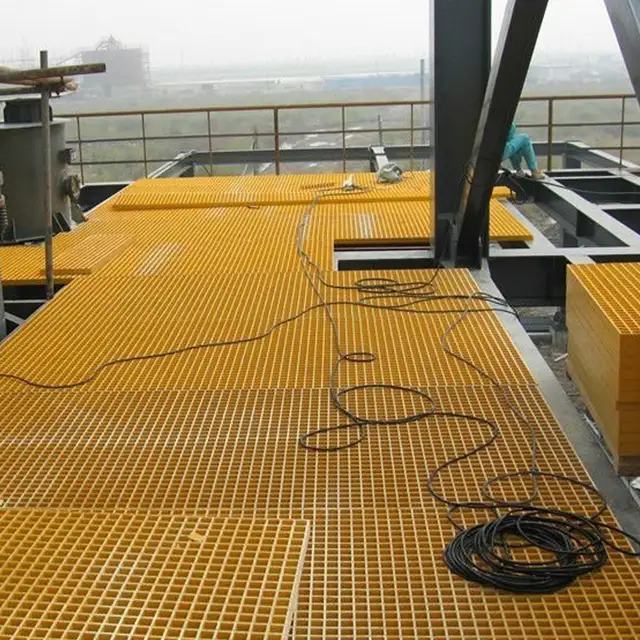
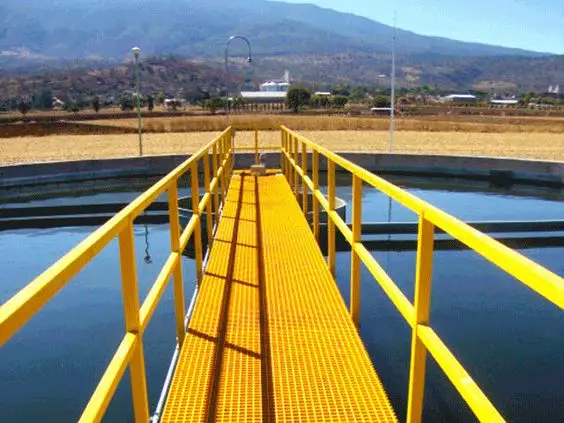
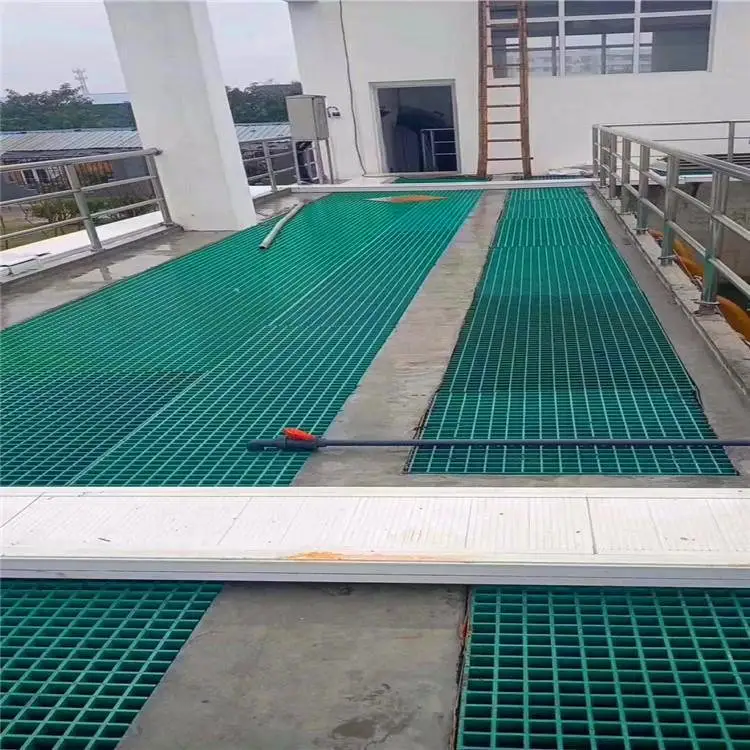
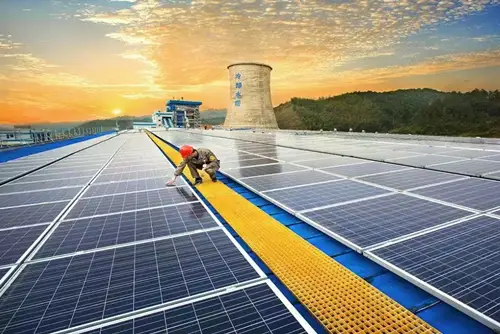
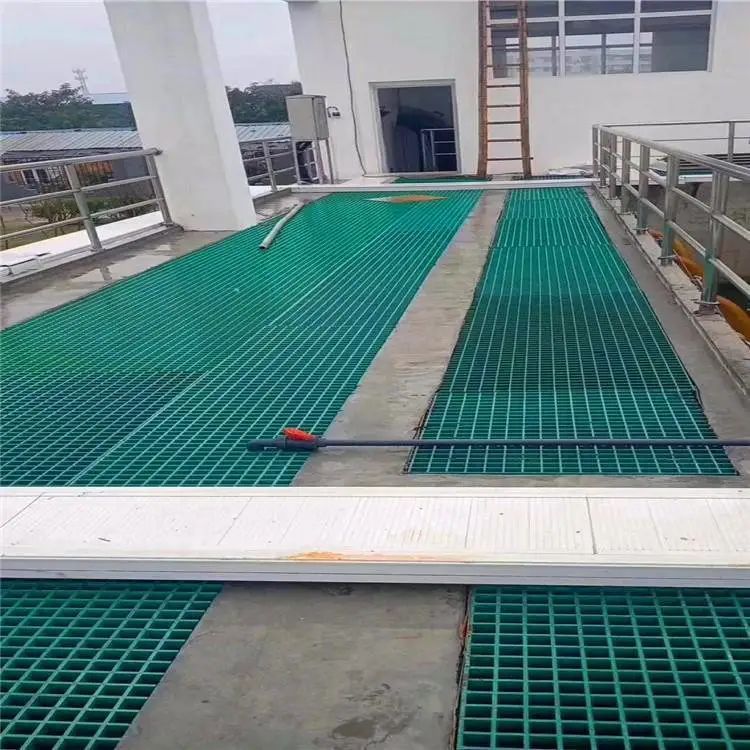
Corrosion resistant FRP grating for offshore platform installations is a composite material grating manufactured from fiberglass reinforcements embedded in a specially formulated resin matrix. Unlike traditional steel grating, FRP grating contains no metal and therefore cannot rust or corrode in the traditional electrochemical sense. The material is produced through two primary manufacturing processes: pultrusion and compression molding.
Pultruded FRP grating consists of load-bearing longitudinal bars (roving) and cross bars that are pulled through a resin bath and heated die, creating a one-piece monolithic structure. Molded FRP grating is created by layering fiberglass mat and resin in a mold under heat and pressure, producing a square-mesh panel with integral bearing bars in both directions.
The key to its corrosion resistance lies in the resin system. Every corrosion resistant FRP grating for offshore platform specification should begin with resin selection:
- Vinyl Ester Resin — Provides exceptional resistance to saltwater, chlorides, and aggressive chemicals. The resin-to-glass bond in vinyl ester systems resists osmotic blistering, a common failure mode in less robust composites exposed to prolonged seawater immersion.
- Isophthalic Polyester Resin — A cost-effective option for less aggressive offshore environments, offering good resistance to saltwater spray and atmospheric corrosion.
- Phenolic Resin — Selected for fire-critical applications where low smoke and flame spread are required, while still maintaining strong corrosion resistance.
These resin systems are enhanced with UV inhibitors to protect against solar degradation on topside installations. The resulting corrosion resistant FRP grating delivers a maintenance-free service life that far exceeds coated steel in offshore conditions.
Why Does FRP Grating Not Rust on Offshore Platforms?
The simple answer is that FRP grating does not rust because it contains no metal. Rust is a specific corrosion process that requires iron or steel to oxidize in the presence of oxygen and moisture — a chemical reaction that produces hydrated iron oxide (Fe₂O₃·nH₂O). Since corrosion resistant FRP grating for offshore platforms is composed entirely of fiberglass and polymer resin, this reaction simply cannot occur.
Here is the science behind why FRP remains corrosion-free in offshore environments:
Electrochemical Passivity
Corrosion in metals is an electrochemical process that requires an anode, cathode, and electrolyte. Steel grating on an offshore platform creates countless galvanic cells when exposed to saltwater — the electrolyte. Each scratch or coating defect becomes an anode site where iron dissolves. FRP grating is electrically non-conductive, meaning there are no free electrons to facilitate electrochemical corrosion. This inherent passivity is one of the most powerful advantages of FRP offshore grating over metallic alternatives.
Resin Barrier Protection
The resin matrix in FRP grating acts as a continuous barrier that prevents moisture and aggressive ions from reaching the glass reinforcement fibers. High-performance vinyl ester resins used in marine-grade FRP products have extremely low moisture absorption rates — typically less than 0.5% by weight after 24-hour immersion per ASTM D570. This compares favorably to coated steel, where a single pinhole in the coating can lead to rapid under-film corrosion.
No Coating Dependency
Steel grating relies entirely on protective coatings — hot-dip galvanizing, epoxy paints, or powder coatings — to prevent rust. These coatings degrade under UV exposure, mechanical abrasion from foot traffic, and chemical cleaning agents used on offshore platforms. Once compromised, corrosion accelerates exponentially. FRP grating requires no such coating because the corrosion resistance is inherent to the material itself, not an applied layer.
How Does FRP Grating Resist Corrosion in Offshore Environments?
Offshore environments present a uniquely aggressive combination of corrosive agents. Understanding how corrosion resistant FRP grating for offshore platforms withstands each of these challenges is essential for specifying the right material.
| Corrosive Agent | Offshore Exposure | FRP Grating Performance | Steel Grating Performance |
|---|---|---|---|
| Saltwater spray | Continuous exposure from wave action and windborne droplets | Vinyl ester FRP shows zero degradation after 10,000+ hours salt spray testing (ASTM B117) | Galvanized steel shows white rust within 6-12 months; red rust at coating defects |
| Chloride ions | High concentration in seawater penetrates oxide layers | Resin matrix resists chloride penetration; no stress corrosion cracking | Chlorides break down passive oxide film on steel, accelerating pitting corrosion |
| High humidity | RH consistently above 80%, often reaching 100% in enclosed areas | Moisture absorption <0.5% (ASTM D570); no structural effect | Accelerates general corrosion, particularly in crevices and under bolt heads |
| Chemical cleaning agents | Periodic washdowns with detergents, biocides, and descaling solutions | Chemical-resistant grades withstand most cleaning agents indefinitely | Aggressive cleaners strip coatings and attack exposed steel |
| Hydrogen sulfide (H₂S) | Present in produced fluids on oil and gas platforms | Inert to H₂S; no sulfide stress cracking | Can cause sulfide stress cracking (SSC) in high-strength steel |
| UV radiation | Direct sunlight on topside installations | UV-inhibited resin systems maintain appearance; no structural loss | Causes coating degradation and chalking, exposing bare steel |
The corrosion resistance mechanism in FRP grating operates at multiple levels. First, the resin matrix creates a physical barrier that blocks moisture and ion ingress. Second, the chemical structure of vinyl ester and isophthalic polyester resins is inherently resistant to hydrolysis — the chemical breakdown caused by water attack. Third, the fiber-resin interface is protected by special coupling agents that prevent capillary wicking of moisture along the glass fibers.
This multi-layered defense means that FRP offshore platform grating can withstand decades of exposure to the harshest offshore conditions without the progressive degradation that steel grating experiences. Third-party testing by organizations such as Lloyd’s Register and DNV GL has verified that properly specified FRP grating retains over 90% of its original mechanical properties after 20 years of simulated offshore service.
FRP Offshore Grating vs Steel Offshore Grating
The choice between FRP offshore grating vs steel offshore grating for platform applications comes down to three critical factors: corrosion resistance, structural performance, and total cost of ownership. Understanding the FRP offshore grating vs steel comparison in each of these areas is essential for making the right specification decision. The following sections break down each dimension to help you make an informed choice.
Corrosion Resistance — The Decisive Factor
This is the single most important comparison factor. Is FRP grating better than coated steel for offshore platform corrosion resistance? The evidence overwhelmingly says yes.
Steel grating relies entirely on protective coatings to survive offshore conditions. Hot-dip galvanizing — the most common protection method — provides a zinc coating that sacrificially corrodes to protect the underlying steel. However, in offshore environments, the zinc layer typically lasts only 5-8 years before significant depletion occurs. Once the zinc is gone, the steel begins to rust. Even with meticulous maintenance, operators report that galvanized steel grating on offshore platforms requires major recoating or replacement every 8-12 years.
Epoxy-coated and powder-coated steel products perform even worse in saltwater environments. A single scratch or impact during installation creates an anode site where concentrated corrosion begins. Under-film corrosion can spread rapidly, remaining hidden until the coating blisters and flakes off.
By contrast, corrosion resistant FRP grating for offshore platforms contains zero metal. There is no coating to fail, no sacrificial layer to deplete, and no electrochemical pathway for corrosion to occur. Independent salt spray testing (ASTM B117) on vinyl ester FRP grating shows no measurable degradation after 10,000 hours of continuous exposure — the equivalent of 20+ years in a severe offshore environment. The corrosion resistance is not a coating; it is a material property of the FRP composition itself.
For operators asking whether FRP is better than coated steel for offshore platform corrosion resistance, the data is conclusive: FRP eliminates the root cause of corrosion failure entirely, whereas coated steel merely delays the inevitable.
Load Capacity and Structural Performance
One common concern when switching from steel to FRP is whether a composite material can match the load-bearing capacity of steel. The answer depends on the specific FRP offshore platform grating load capacity specs and how they compare to steel equivalents.
FRP grating is available in a wide range of load-bearing configurations. Standard pultruded grating panels come in depths from 25 mm (1 inch) to 75 mm (3 inches), with bearing bar spacing typically at 1.5-inch or 2-inch centers. The load capacity is determined by:
- Depth of bearing bars — Deeper bars provide greater moment of inertia and higher load ratings. A standard 38 mm (1.5-inch) deep FRP grating panel with 1.5-inch bar spacing is rated for concentrated loads up to 1,000 lbs and uniform loads up to 300 psf — sufficient for most offshore walkway applications.
- Glass-to-resin ratio — High-quality pultruded grating uses 65-70% glass by weight, delivering maximum strength-to-weight ratio. This produces equivalent structural performance to steel at a fraction of the weight.
- Resin selection — Vinyl ester resins provide not only corrosion resistance but also superior mechanical property retention at elevated temperatures, important for platforms in tropical regions.
For direct comparison, a typical steel grating panel (6 mm thick, 30 mm deep flat bars at 30 mm spacing) supports roughly 650 psf uniform load. An FRP grating panel of equivalent load capacity weighs approximately 75% less — about 4.5 kg/m² versus 18 kg/m² for steel. This weight advantage translates directly to reduced structural steel requirements for the supporting framework, lower transportation costs, and safer manual handling during installation.
It is important to note that FRP grating has a lower modulus of elasticity than steel — approximately 1/20th of steel’s stiffness. This means that for the same load, an FRP panel deflects more than a steel panel. However, this is accounted for in design through the use of deflection-limited design criteria (typically L/100 or L/150, where L is the span), rather than strength-limited design. Properly engineered FRP installations meet all OSHA and international building code requirements for offshore platform walkways.
Manufacturers provide comprehensive load tables for each grating profile, tested in accordance with ASTM D3841 and ANSI/NAAMM FPP 100-XX standards. These specifications allow engineers to select the correct FRP offshore platform grating load capacity specs for any application, from light pedestrian access to heavy equipment platforms.
Lifecycle Cost Comparison
When evaluating corrosion resistant FRP grating for offshore platforms cost, it is essential to look beyond the initial purchase price and consider the total lifecycle cost. While the upfront cost of FRP grating is typically 1.5 to 2.5 times higher than steel grating, the long-term economics strongly favor FRP.
| Cost Factor | Steel Grating (Galvanized) | FRP Grating (Vinyl Ester) |
|---|---|---|
| Initial material cost | $25-40 per m² | $55-90 per m² |
| Installation cost | Higher (requires heavy lifting equipment, welding or specialized clips) | Lower (75% lighter, cut with standard tools, manual handling) |
| Coating maintenance (year 5-8) | $15-25 per m² for re-galvanizing or epoxy recoating | $0 — no coating needed |
| Coating maintenance (year 10-15) | $25-40 per m² for replacement or major refurbishment | $0 — no coating needed |
| Inspection cost | Annual coating inspections, thickness measurements, corrosion mapping | Visual inspection only, every 3-5 years |
| Production downtime for maintenance | Significant — areas must be taken offline, abrasive blasting creates fire risk | None — zero maintenance intervals |
| Service life | 8-15 years before replacement needed | 20-30+ years, original properties retained |
| Total 20-year cost | $120-200 per m² | $55-90 per m² |
As the table demonstrates, the total 20-year cost of FRP grating is typically 40-55% lower than steel grating, despite the higher initial purchase price. The savings come from eliminating maintenance cycles, reducing inspection requirements, and avoiding costly production downtime for grating replacement.
For offshore operators, the question is not whether they can afford corrosion resistant FRP grating for offshore platforms — it is whether they can afford the ongoing hidden costs of steel. When factoring in the engineering costs, logistics, safety risks, and production interruptions associated with steel grating maintenance, FRP delivers a compelling return on investment.
How Long Does Corrosion Resistant FRP Grating Last in Saltwater Environments?
This is one of the most frequently asked questions from offshore operators. The durability of corrosion resistant FRP grating for offshore platforms in saltwater environments has been validated through decades of field performance and accelerated laboratory testing.
Under normal offshore service conditions — continuous exposure to saltwater spray, humidity, and UV — properly specified vinyl ester FRP grating has a service life of 20 to 30 years or more. This is not theoretical; multiple installations from the 1990s on North Sea and Gulf of Mexico platforms remain in service today with their original FRP grating still meeting structural requirements.
Several factors influence the actual lifespan:
- Resin quality — Vinyl ester resins provide the longest service life in aggressive saltwater environments. Isophthalic polyester offers 15-20 years in less severe conditions. Orthophthalic polyester should be avoided for offshore use.
- UV exposure — Topside grating exposed to direct sunlight benefits from UV-inhibited resin systems. Without UV protection, the surface may chalk or discolor over 10-15 years, though this is cosmetic only and does not affect structural integrity.
- Mechanical wear — Heavy equipment traffic or abrasive materials can wear the surface. Gritted surfaces for slip resistance may require refreshing after 10-15 years of heavy use.
- Chemical exposure — Platforms with aggressive chemical discharges (acids, caustics, solvents) require chemical-resistant resin grades. Vinyl ester FRP handles most offshore chemicals without degradation.
In comparison, galvanized steel grating in the same offshore saltwater environment typically requires replacement every 8-15 years. The zinc coating depletes, rust sets in, and the structural integrity of the bearing bars is compromised by section loss from corrosion pitting.
For operators planning long-term platform life extensions — common in the offshore industry where platforms often operate well beyond their original 20-25 year design life — corrosion resistant FRP grating provides a future-proof solution that will outlast the platform itself.
Non-Slip FRP Grating for Offshore Platforms
Safety is paramount on offshore platforms, where wet surfaces, oil spills, and constant motion create hazardous walking conditions. Non slip FRP grating for offshore platforms addresses this challenge through integral surface treatments that provide reliable traction even in the most challenging conditions.
FRP grating offers several anti-slip surface options:
- Gritted top surface — Silica sand or aluminum oxide grit is embedded into the resin during manufacturing, creating a rough surface profile. This is the most common offshore specification, providing a coefficient of friction typically above 0.6 (wet), exceeding OSHA and international marine safety standards.
- Concave/convex surface — Molded grating panels feature a raised geometric pattern on the walking surface that channels water and debris away from foot traffic areas while providing positive traction.
- Grit-filled resin coating — For retrofit applications or areas requiring maximum slip resistance, an additional grit-filled resin coating can be applied to the grating surface.
A critical advantage of FRP over steel in offshore safety is that the slip resistance does not degrade over time. Steel grating loses its slip-resistant properties as the surface coating wears and the underlying metal becomes smooth. In contrast, the grit particles in FRP grating are embedded throughout the resin layer — as the surface wears, fresh grit particles are exposed, maintaining consistent traction throughout the service life.
Additionally, because FRP does not rust, there is no slippery rust scale to contaminate the walking surface. Steel grating in advanced stages of corrosion develops loose rust flakes that create slip hazards — a problem that simply does not exist with non-slip FRP grating.
For offshore platforms requiring certified slip resistance, non slip FRP grating for offshore platforms can be manufactured to meet specific coefficient of friction requirements, with testing per ASTM E303 (British Pendulum) or ASTM F1679 (Variable Incidence Tribometer).
How to Choose the Best Corrosion Resistant FRP Grating for Offshore Oil Platforms
Selecting the best corrosion resistant FRP grating for offshore oil platforms requires evaluating several technical parameters against the specific operating conditions of the installation. There is no single "best" product — the correct choice depends on the service environment, structural requirements, and regulatory standards.
Here is a practical selection framework:
1. Define the Corrosion Environment
Classify the exposure zone according to ISO 12944 or NORSOK M-001 standards:
- C5-M (Very High - Marine) — Topsides within 500 meters of the splash zone. Requires vinyl ester resin with proven salt spray resistance.
- CX (Extreme) — Splash zone, submerged, or enclosed areas with high chloride concentration and humidity. Requires premium vinyl ester or specialty resin systems.
- Internal/Chemical areas — Platforms with hydrogen sulfide, carbon dioxide, or chemical processing. Requires chemical-resistant resin formulations with tested compatibility.
2. Determine Load Requirements
Refer to the platform design load specifications. Typical offshore grating load classifications include:
- Light pedestrian — Access walkways, catwalks. 38 mm deep grating, 2-inch spacing, 40 psf uniform load.
- Medium industrial — Equipment access platforms, mezzanines. 38-50 mm deep grating, 1.5-inch spacing, 100-300 psf uniform load.
- Heavy duty — Helideck walkways, crane access, equipment laydown areas. 50-75 mm deep grating, 1.5-inch spacing, 500+ psf uniform load.
3. Verify Certifications
Offshore platforms require grating products with third-party certification from recognized classification societies. The best FRP grating for offshore oil platforms carries:
- Lloyd’s Register Type Approval — For structural applications on classed platforms
- DNV GL Certification — For North Sea and European offshore installations
- ABS (American Bureau of Shipping) — For Gulf of Mexico and international platforms
- Fire performance testing — ASTM E84 Class A flame spread (≤25), IMO FTP Code Part 2 for offshore fire safety
4. Evaluate Fire Safety Requirements
For platforms with strict fire safety regulations, phenolic resin FRP grating provides the lowest smoke generation and flame spread characteristics, meeting the most stringent offshore fire safety standards.
By systematically evaluating these factors, operators can specify the best corrosion resistant FRP grating for offshore oil platforms that delivers optimal performance for the specific application, regulatory context, and budget constraints of their project.
Real-World Case Studies of FRP Grating on Offshore Platforms
The performance advantages of corrosion resistant FRP grating for offshore platforms are not theoretical. Real-world installations across the global offshore industry have demonstrated the material’s durability, cost savings, and safety benefits over decades of service.
North Sea Platform — 15-Year Retrofit Evaluation
A major North Sea oil production platform operated by Equinor replaced 2,800 m² of galvanized steel grating with vinyl ester FRP grating during a mid-life upgrade in 2008. The steel grating had required two full coating replacements (2001 and 2006) and spot repairs annually. After 15 years of FRP service, inspection in 2023 found:
- Zero corrosion-related structural degradation
- Mechanical properties within 95% of original specification
- No coating or surface treatment required in the entire period
- Estimated cost savings of $2.1 million compared to maintaining steel
Gulf of Mexico Deepwater Platform — Chemical Resistance Challenge
A deepwater platform in the Gulf of Mexico experienced catastrophic corrosion of steel grating in areas exposed to produced water containing H₂S and CO₂. Replacement intervals for steel grating were averaging just 4 years. The operator switched to corrosion resistant FRP grating with a premium vinyl ester resin system. Results after 8 years:
- No measurable corrosion or chemical attack
- Eliminated 2 planned steel replacement cycles (saving $780,000 in materials and $1.4 million in installation labor)
- Zero safety incidents related to grating failure
- Personnel slip-and-fall incidents reduced by 60% due to consistent non-slip surface
Asia-Pacific FPSO — Weight Reduction Program
A floating production, storage, and offloading (FPSO) vessel required grating replacement across 3,500 m² of deck area. The operator selected heavy-duty FRP grating (50 mm depth, 1.5-inch spacing) over steel to reduce topside weight. The FRP installation saved 47 tonnes of topside weight — critical for FPSO stability and payload capacity. The FRP grating was installed in 2016 and remains fully serviceable with zero maintenance as of 2026.
Offshore Wind Farm Access Platforms
An offshore wind farm in the Baltic Sea specified FRP grating for all turbine access platforms and transition piece walkways. With 25+ year design life requirements and minimal maintenance budgets, the developer chose vinyl ester FRP grating with gritted surface. Early performance data shows zero corrosion after 5 years of service, with the grating meeting all load and slip resistance specifications.
These case studies consistently demonstrate that corrosion resistant FRP grating for offshore platforms delivers measurable, documented advantages in corrosion resistance, lifecycle cost, safety performance, and operational reliability.
Conclusion
Offshore platforms demand materials that can withstand the most aggressive corrosion environment on earth while maintaining structural integrity, safety, and cost-effectiveness over decades of service. Corrosion resistant FRP grating for offshore platform applications has proven itself as the superior alternative to steel grating across every performance metric that matters to offshore operators.
The key takeaways are clear:
- FRP grating cannot rust — its corrosion resistance is inherent to the material, not dependent on coatings that fail over time.
- FRP grating lasts 20-30+ years in saltwater environments, compared to 8-15 years for galvanized steel.
- Total lifecycle costs are 40-55% lower than steel when factoring in maintenance, inspection, and replacement.
- FRP grating is 75% lighter than steel, reducing structural support requirements and installation costs.
- Integrated non-slip surfaces maintain traction throughout the service life, improving offshore safety.
- Properly specified FRP grating meets or exceeds all major offshore certification standards, including Lloyd’s Register, DNV GL, and ABS.
For engineering teams evaluating grating materials for new offshore platforms, retrofits, or life extension projects, the evidence supports specifying corrosion resistant FRP grating for offshore platform components as the primary material for walkways, platforms, mezzanines, and drainage applications. The upfront investment in FRP pays dividends through elimination of corrosion-related maintenance, reduced operational downtime, and improved personnel safety throughout the platform’s service life.
Contact our engineering team to discuss your specific offshore grating requirements and receive a project-specific comparison of FRP versus steel for your application.