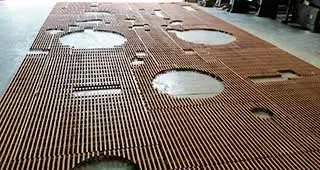
Introduction
When designing industrial walkways, platform access systems, or maintenance catwalks, engineers and facility managers face a critical materials decision: FRP platform walkway vs steel grating platform — which delivers better value for your specific project? Both materials have proven track records, but they serve different operational environments and budget profiles.
Fiberglass Reinforced Plastic (FRP) walkways have gained significant traction in industries ranging from chemical processing to offshore oil and gas, while traditional steel grating remains a go-to choice for structural applications where raw strength and low upfront cost are the primary drivers. This comprehensive comparison examines weight, corrosion resistance, installation costs, maintenance requirements, lifespan, and load capacity to help you make an informed decision.
Whether you are evaluating fiberglass walkway vs catwalk grating options for a new facility or replacing corroded steel on an existing platform, understanding the trade-offs between these two materials will save you time, money, and operational headaches down the line.
What Are FRP Platform Walkways and Steel Grating Platforms?
What Is an FRP Platform Walkway?
An FRP (Fiberglass Reinforced Plastic) platform walkway is a composite structure made from thermosetting resin reinforced with glass fibers. These walkways are manufactured using either pultrusion or compression molding processes, resulting in products like fiberglass molded grating composite panels and pultruded profiles. The resin matrix — typically polyester, vinyl ester, or epoxy — provides chemical resistance while the glass fibers deliver structural strength.
FRP platform walkways are inherently non-conductive, non-magnetic, and resistant to a wide range of chemicals. They weigh approximately 75% less than equivalent steel grating, making them ideal for lightweight FRP walkway applications where structural loading is a concern. FRP grating is available in molded (square mesh) and pultruded (rectangular bar) configurations, each suited to different load requirements and span lengths.
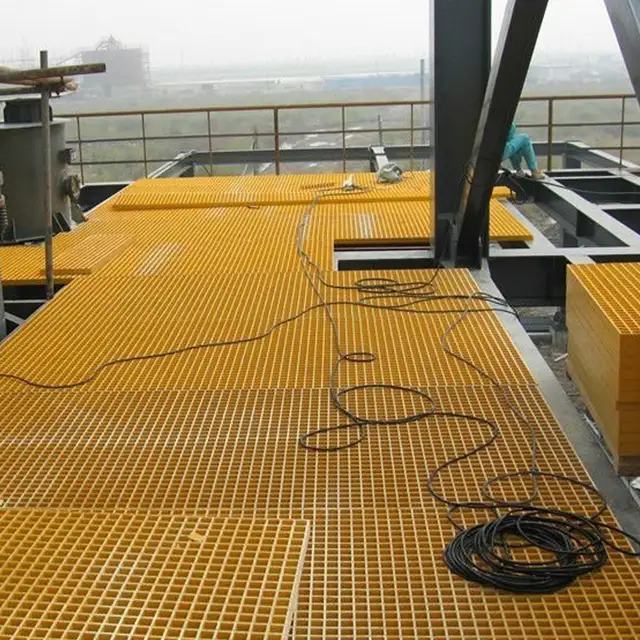
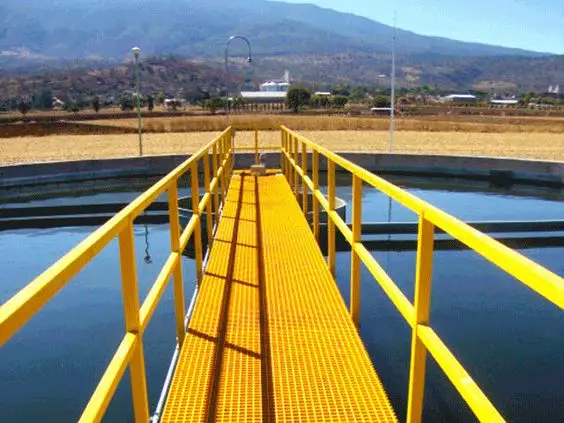
Common applications include offshore platform walkways, chemical plant catwalks, water treatment plant flooring, marine dockage, and food processing facilities where corrosion resistance and hygiene are paramount.
What Is a Steel Grating Platform?
A steel grating platform is constructed from carbon steel or stainless steel bars, welded or press-locked into a grid pattern. This traditional material has been used for decades in industrial walkways, mezzanine floors, trench covers, and platform decking. Steel grating for platform and walkway applications is typically hot-dip galvanized or painted to resist corrosion, though stainless steel options are available for more demanding environments.
Steel grating offers exceptional load-bearing capacity, with standard designs supporting uniform loads of 300 psf or more depending on bar size and spacing. It performs well in high-temperature environments and under heavy point loads. However, steel grating is heavy — a typical 1-inch by 3/16-inch bar grating weighs approximately 10-12 pounds per square foot, compared to 3-4 pounds for FRP grating of comparable strength.
The primary limitation of steel grating is its susceptibility to corrosion. Even galvanized coatings eventually degrade in harsh environments, requiring periodic maintenance and eventual replacement. In chemical processing, offshore, or wastewater applications, fiberglass walkway vs catwalk grating comparisons consistently show FRP outperforming steel in longevity.
FRP Platform Walkway vs Steel Grating Platform: Head-to-Head Comparison
Let us examine the key performance metrics that define the FRP platform walkway vs steel grating platform difference across six critical categories. Understanding these differences is essential for selecting the right material for your industrial walkway or platform application.
Weight Comparison
FRP grating weighs approximately 3-4 pounds per square foot, while steel grating of equivalent strength weighs 10-12 pounds per square foot. This 70-75% weight reduction has profound implications: lighter supporting structures, reduced shipping costs, easier handling during installation, and lower foundation requirements. For projects involving rooftop walkways, elevated platforms, or retrofitting existing structures with limited load capacity, a lightweight FRP walkway vs aluminum walkway comparison also favors FRP for cost and corrosion performance, though aluminum is lighter still.
Corrosion Resistance
This is where FRP decisively outperforms steel. FRP is inherently corrosion-resistant — it does not rust, rot, or degrade when exposed to moisture, chemicals, saltwater, or UV radiation (with appropriate UV inhibitors in the resin). Steel grating, even when hot-dip galvanized, will eventually corrode in aggressive environments. In chemical plants, offshore platforms, and water treatment facilities, FRP walkways typically last 2-3 times longer than galvanized steel before requiring replacement. For Fiberglass Walkway vs. Catwalk Grating decisions in corrosive environments, FRP is the clear winner.
Strength and Load Capacity
Steel grating generally offers higher absolute strength. A standard steel grating can handle concentrated loads of 1,000 pounds or more per square foot, making it suitable for heavy industrial traffic, equipment staging, and vehicle access. FRP grating has good strength-to-weight ratio but lower absolute load capacity — typically rated for 200-500 psf uniform load depending on bar configuration and span. However, for most personnel walkway and light-service platform applications, standard FRP grating provides more than adequate strength. The question of what weight load can an FRP platform walkway handle vs steel grating depends on specific product specifications: heavy-duty pultruded FRP grating can support concentrated loads exceeding 750 pounds per square foot at shorter spans.
Installation Ease and Speed
FRP platform walkways are significantly easier to install than steel grating. A single worker can carry and position an FRG panel that would require two or three workers for the equivalent steel panel. FRP can be cut on-site using standard carbide-tipped saw blades, and it requires no welding, hot work permits, or heavy lifting equipment. Steel grating installation often requires welding, grinding, crane lifting for larger panels, and strict safety protocols for hot work. When asking which is easier to install — FRP platform walkway or steel grating platform, the answer is unequivocally FRP. Installation time savings of 30-50% are common.
Maintenance Requirements
FRP walkways require minimal maintenance. Occasional pressure washing to remove dirt and debris is typically sufficient. There is no need for repainting, recoating, or rust removal. Steel grating demands regular maintenance: galvanized coatings must be inspected and touched up annually in corrosive environments; painted steel requires repainting every 2-3 years; and corroded sections must be cut out and replaced. When evaluating how does maintenance compare between FRP walkway and steel grating platforms, the lifetime maintenance cost of steel can approach or exceed its initial purchase price, while FRP maintenance costs remain near zero.
Lifespan and Durability
FRP platform walkways installed in appropriate environments have a service life of 20-25 years or more. Steel grating typically lasts 10-15 years in mild environments and as few as 3-5 years in aggressive chemical or marine environments before corrosion compromises structural integrity. Answering how long does an FRP platform walkway last compared to steel grating: in a coastal chemical plant, expect FRP to last 20+ years versus 5-8 years for galvanized steel. FRP also resists UV degradation (with proper resin formulation) and maintains its structural properties across a wide temperature range from -40°F to 250°F (-40°C to 121°C).
Cost Analysis: FRP vs Steel Grating for Platforms
A thorough FRP platform walkway vs steel grating platform cost analysis must look beyond the initial purchase price to include installation, maintenance, and replacement costs over the full lifecycle of the installation.
Initial Material Cost
Steel grating has a lower upfront material cost. Standard galvanized steel grating typically ranges from $8 to $15 per square foot, while FRP grating ranges from $15 to $30 per square foot depending on resin type, bar thickness, and span rating. Stainless steel grating, which approaches FRP in corrosion resistance, costs $25 to $45 per square foot — often exceeding FRP pricing. So the answer to which is more cost-effective: FRP platform walkway or steel grating platform depends heavily on whether you factor in total cost of ownership or just initial material cost.
Installation Labor Cost
FRP installation labor costs are substantially lower. Because FRP panels are 70% lighter, they require smaller crews and no heavy lifting equipment. FRP can be cut with standard power tools and fastened with clips or adhesives — no welding, no hot work permits, no specialized steel fabrication skills. Installation of FRP grating typically costs $3-5 per square foot versus $6-10 per square foot for steel grating. For a 5,000-square-foot platform, that represents a savings of $15,000 to $25,000 in labor alone on the installation phase.
Total Cost of Ownership Over 10 Years
When calculated over a 10-year lifecycle, FRP platform walkways often prove more economical despite the higher initial material cost. Consider this comparison for a typical 1,000-square-foot industrial walkway in a mildly corrosive environment:
| Cost Factor | FRP Platform Walkway | Steel Grating Platform |
|---|---|---|
| Material (1,000 sq ft) | $20,000 | $10,000 |
| Installation labor | $4,000 | $8,000 |
| Annual maintenance (10 yrs) | $1,000 | $12,000 |
| Replacement after 10 years | $0 | $18,000 |
| Total 10-Year Cost | $25,000 | $48,000 |
In aggressive chemical or marine environments, the gap widens further as steel may require full replacement within 5-7 years. This lifecycle cost advantage is why many engineering firms now specify fiberglass molded grating composite platforms for new construction in corrosive environments, even when the initial budget appears higher.
When to Choose FRP Platform Walkway Over Steel Grating
Knowing when to choose FRP platform walkway over steel grating platform is critical for project success. The Fiberglass Walkway vs. Catwalk Grating decision hinges on environments where FRP provides measurable advantages. Here are the scenarios where FRP is the superior material choice:
- Chemical and corrosive environments: Any facility handling acids, alkalis, solvents, or caustic chemicals will rapidly degrade steel grating. FRP resists chemical attack and maintains structural integrity for decades. Chemical plants, refineries, and battery manufacturing facilities are prime candidates.
- Offshore and marine applications: Saltwater and steel are a destructive combination. Offshore oil platforms, ship decks, dockside walkways, and coastal infrastructure all benefit from FRP non-corrosive properties. The Fiberglass Walkway vs. Catwalk Grating decision in marine environments always favors FRP for longevity.
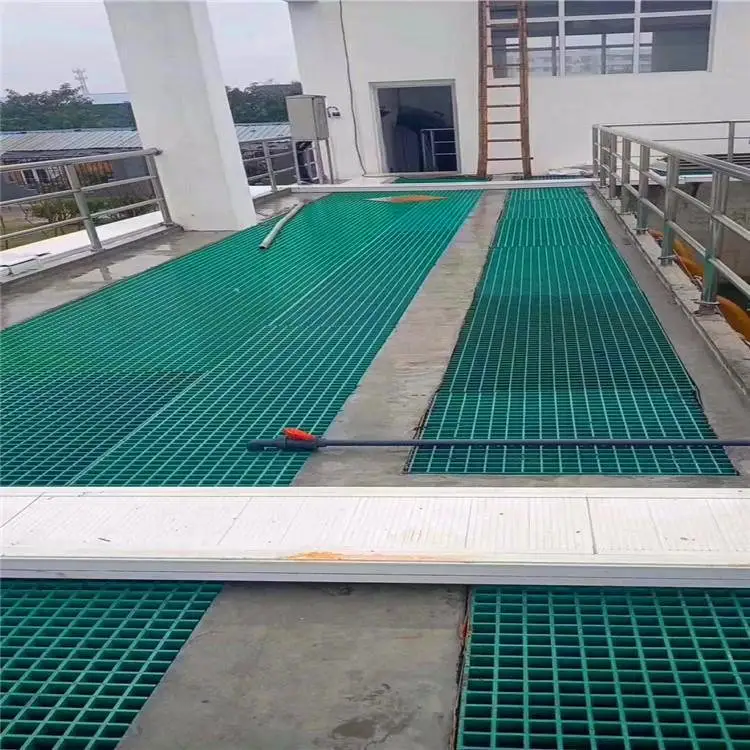
- Water and wastewater treatment: The humid, chemical-laden atmosphere above clarifiers, aeration basins, and chemical feed areas destroys steel within a few years. FRP walkways installed in these environments routinely last 20+ years with zero corrosion-related maintenance.
- Electrical safety requirements: FRP is electrically non-conductive and non-magnetic, making it the safe choice for electrical substations, transformer yards, battery rooms, and areas near high-voltage equipment. Steel grating poses electrocution and arc-flash hazards in these settings.
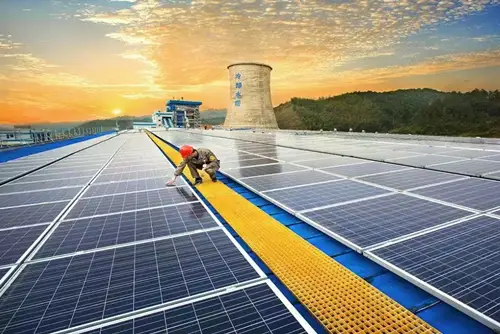
- Weight-sensitive structures: When installing walkways on roofs, mezzanines, elevated tanks, or existing structures with limited load capacity, the lightweight FRP walkway vs aluminum walkway — and vs steel — advantage is decisive. FRP can reduce structural dead load by up to 75% compared to steel.
- Food and pharmaceutical processing: FRP grating with a non-porous resin surface resists bacterial growth, is easy to sanitize, and will not rust into products. USDA-approved FRP resins are available for direct food contact areas.
For each of these scenarios, the higher initial cost of FRP is recouped many times over through reduced maintenance, lower installation costs, and extended service life. When evaluating steel grating for platform and walkway alternatives, consider that FRP also offers slip-resistant surfaces molded directly into the grating, eliminating a separate safety treatment step.
When Steel Grating Is the Better Choice
Steel grating remains the right choice for many projects. Here is when steel grating for platform and walkway applications outperform FRP:
- High-temperature environments: Steel maintains its structural strength at temperatures exceeding 400°F (204°C), while FRP begins to degrade above 200-250°F (93-121°C). Foundries, steel mills, boiler rooms, and kiln areas require steel grating.
- Extreme load requirements: For heavy equipment platforms, vehicle access ways, crane walkways, or any application requiring concentrated load ratings above 1,000 psf, steel grating delivers proven performance with well-documented engineering data.
- Fire-rated assemblies: Steel is non-combustible and maintains structural integrity in fire conditions. FRP is combustible (though fire-retardant resin grades are available that meet ASTM E84 Class 1 or Class A flame spread ratings). Applications requiring a 2-hour fire rating typically mandate steel.
- Budget-constrained, non-corrosive environments: For indoor catwalks in warehouses, light manufacturing, or other dry environments where corrosion is not a factor, steel grating offers the lowest initial cost solution. The total cost of ownership advantage of FRP diminishes when corrosion is not a concern.
- Existing steel structures: When extending or repairing an existing steel platform, matching the material simplifies connection details, thermal expansion compatibility, and electrical continuity. Mixing FRP with steel in existing structures requires careful engineering of connection points.
The fiberglass walkway vs catwalk grating comparison is not about which material is universally superior, but which is best suited to your specific operating conditions, structural requirements, and budget profile.
Conclusion
The FRP platform walkway vs steel grating platform decision ultimately depends on your project priorities:
- Choose FRP platform walkways when corrosion resistance, low maintenance, light weight, electrical safety, and long service life are your primary concerns. The higher initial investment pays dividends over 15-25 years of trouble-free service.
- Choose steel grating platforms when extreme load capacity, high-temperature resistance, non-combustibility, or lowest possible upfront cost are the deciding factors — and when the operating environment is dry and non-corrosive.
For most industrial applications involving chemical processing, water treatment, offshore installations, marine environments, or electrical safety, FRP offers superior long-term value. The fiberglass walkway vs catwalk grating analysis consistently shows FRP delivering a lower total cost of ownership in challenging environments, despite a higher price tag at the procurement stage.
We recommend working with an experienced FRP grating manufacturer to evaluate your specific load requirements, span lengths, chemical exposure levels, and environmental conditions. A properly specified FRP platform walkway will outperform steel in the environments where it matters most, delivering reliable service for decades with minimal maintenance.
Need help selecting the right platform walkway material for your project? Contact our engineering team for a detailed FRP platform walkway vs steel grating platform cost analysis tailored to your specific application.