Introduction
Selecting the right walking surface for offshore rigs is a critical safety and operational decision. The harsh marine environment — with constant salt spray, high humidity, extreme weather, and heavy equipment loads — demands a material that can withstand corrosion while providing reliable slip resistance and structural integrity. This is where the FRP walkway platform for offshore rig has emerged as the preferred solution for engineers and rig operators worldwide.
Fiber-Reinforced Polymer (FRP) walkway platforms offer a unique combination of lightweight construction, exceptional corrosion resistance, and high load-bearing capacity that makes them ideally suited for offshore oil and gas platforms, drilling rigs, and production facilities. Unlike traditional materials such as steel or aluminum, FRP does not rust, requires minimal maintenance, and can be engineered to meet the exact specifications of each installation.
This complete selection guide covers everything you need to know about FRP walkway platform for offshore rig applications — from material properties and load capacities to installation methods, cost considerations, and comparisons with alternative materials. Whether you are a procurement manager, offshore facility engineer, or rig operator, this guide will help you make an informed decision for your next offshore walkway project.
What Is an FRP Walkway Platform for Offshore Rigs?
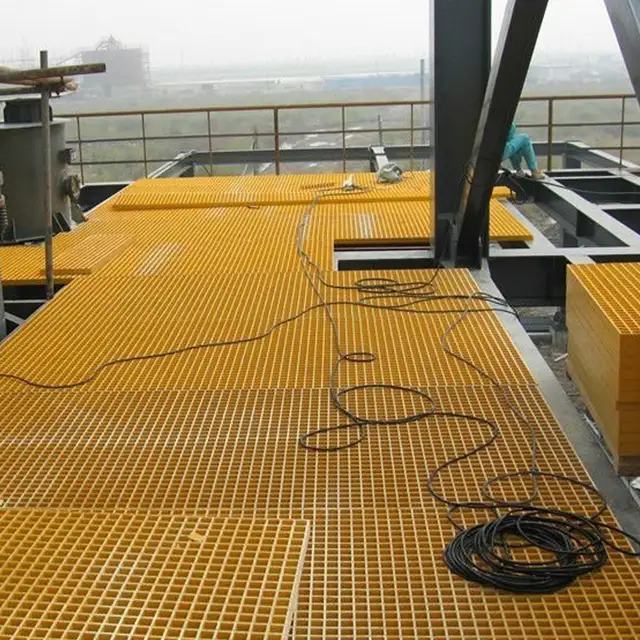
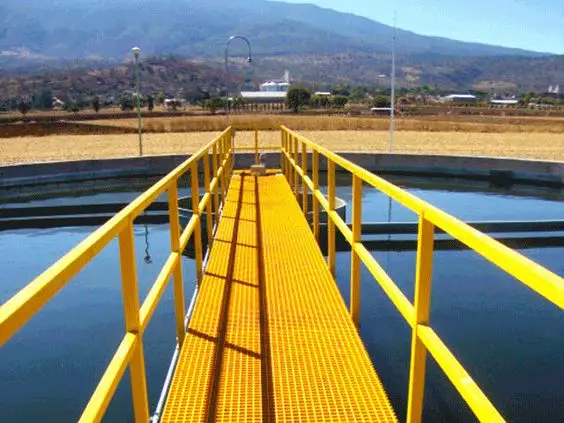
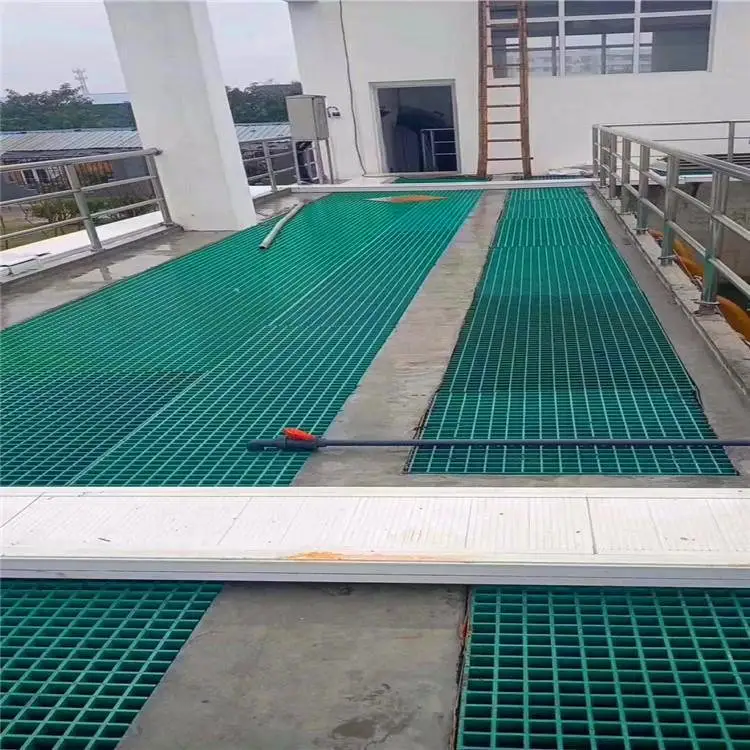
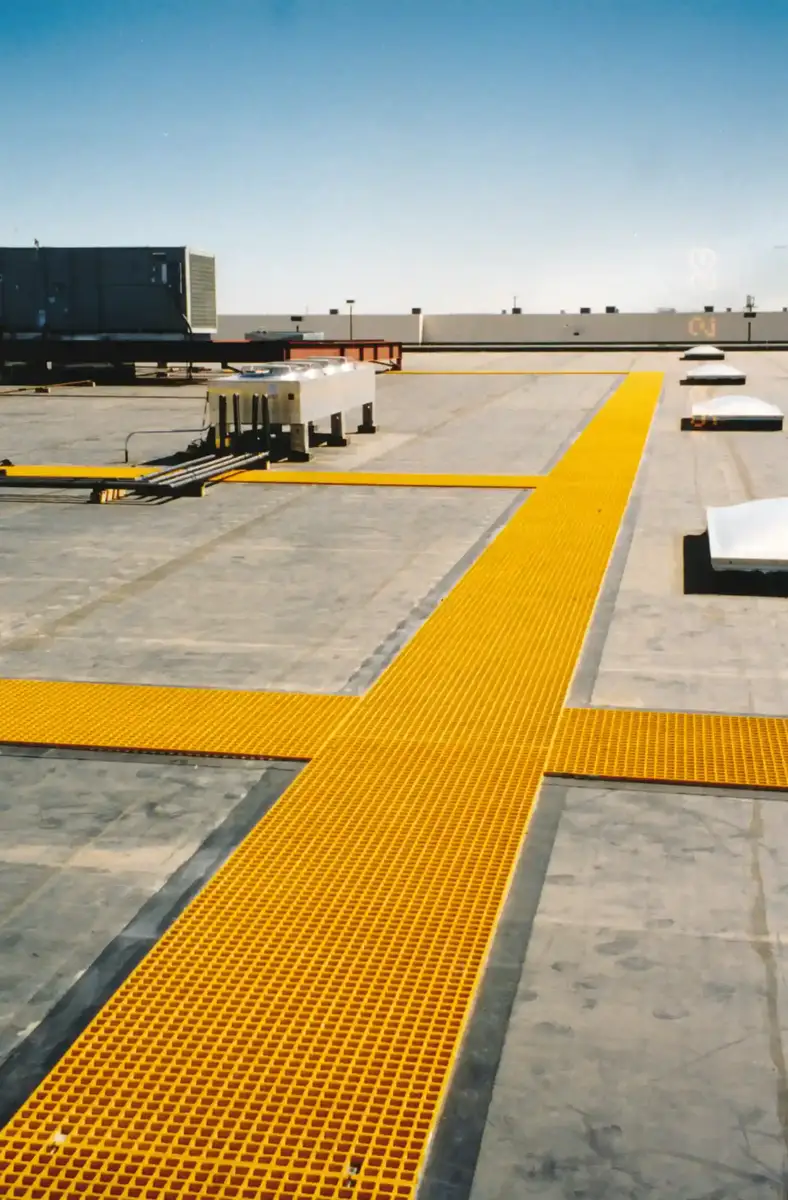
An FRP walkway platform for offshore rig installations is a modular, fiber-reinforced polymer flooring system designed specifically for the demanding conditions found on offshore oil and gas platforms, drilling rigs, and floating production storage and offloading (FPSO) vessels. These platforms are manufactured using a combination of fiberglass reinforcements and thermosetting resin systems — typically polyester, vinyl ester, or epoxy — that are molded under heat and pressure to create a durable, corrosion-proof structural panel.
The key components of an FRP walkway platform include:
- Load-bearing gratings or solid panels — the primary walking surface, available in molded or pultruded configurations. The FRP offshore platform grating for oil and gas applications typically uses heavy-duty molded grating with 25-50 mm thickness.
- Support structures — FRP I-beams, channels, and angles that form the subframe
- Anti-slip surfaces — integrally molded grit patterns, silica-infused surfaces, or raised profile textures
- Fastening systems — corrosion-resistant clips, brackets, and mounting hardware designed for marine environments
FRP walkway platforms are used extensively across offshore rigs for access walkways, equipment platforms, mezzanine levels, helideck access paths, pipe rack walkways, and safety escape routes. They are designed to meet international standards including ABS (American Bureau of Shipping), DNV, and Lloyd's Register requirements for offshore installations, ensuring compliance with the strictest safety and performance criteria in the industry.
Unlike steel alternatives, an FRP platform walkway installation guide typically emphasizes the simplicity of working with prefabricated modular sections that can be cut, drilled, and assembled on-site using standard tools — no welding or hot work required. This makes FRP particularly attractive for offshore retrofits and brownfield projects where minimizing downtime and eliminating fire risks are top priorities.
Why Choose the FRP Walkway Platform for Offshore Rig Applications?
Offshore oil rigs operate in one of the most corrosive environments on earth. Saltwater, hydrogen sulfide, and constant humidity rapidly degrade traditional materials. Here is why the FRP walkway platform for offshore rig environment has become the material of choice for offshore walkway applications:
Superior Corrosion Resistance
FRP is inherently immune to galvanic corrosion, rust, and chemical attack. The corrosion resistant FRP grating for offshore platform applications maintains its structural integrity without protective coatings, unlike steel which requires frequent painting and coating systems. This eliminates the costly and time-consuming maintenance cycles that plague steel installations on offshore rigs.
Significant Weight Reduction
FRP walkway platforms weigh approximately 75% less than equivalent steel platforms and 30-40% less than aluminum. For offshore rigs, this weight reduction translates directly into lower structural support requirements, reduced transportation costs, and easier handling during installation. A typical heavy duty FRP platform walkway for industrial use weighing only 10-15 kg/m² can replace a steel grating weighing 60-80 kg/m², reducing the dead load on the rig structure significantly. The corrosion resistant FRP grating for offshore platform installations also eliminates the need for heavy cathodic protection systems.
Excellent Anti-Slip Properties
Safety is paramount on offshore rigs, and FRP walkway platforms excel in this area. The surface can be manufactured with integrally molded anti-slip grit, concave-convex patterns, or silica-infused top surfaces that provide superior traction even when wet, oily, or covered in mud. This exceeds OSHA and international maritime safety standards for slip resistance.
Non-Conductive and Non-Magnetic
FRP is electrically non-conductive and non-magnetic, making it ideal for use near sensitive electronic equipment, electrical substations, and areas where spark prevention is critical. This property also eliminates concerns about galvanic coupling when FRP is installed alongside aluminum or other metals on the rig.
Low Lifetime Maintenance
Once installed, an FRP walkway platform requires minimal maintenance. There is no need for painting, coating, or cathodic protection. Occasional pressure washing to remove debris is typically sufficient to keep the platform in optimal condition for decades.
FRP Walkway vs Steel Walkway for Offshore Rigs — Which Is Better?
This is one of the most common questions engineers face when specifying walkway surfaces for offshore installations. Both FRP and steel have their place, but the choice depends on specific operating conditions, budget, and lifecycle expectations.
| Property | FRP Walkway Platform | Steel Walkway Platform | Aluminum Walkway Platform |
|---|---|---|---|
| Weight | Very light (10-15 kg/m²) | Heavy (60-80 kg/m²) | Moderate (15-25 kg/m²) |
| Corrosion Resistance | Excellent — no rust | Poor — requires coatings | Good — but susceptible to galvanic corrosion |
| Strength-to-Weight Ratio | Excellent | Good | Moderate |
| Expected Lifespan | 20-25+ years | 8-15 years (with coatings) | 15-20 years |
| Initial Cost | Moderate | Lowest | Moderate |
| Lifecycle Cost | Lowest | High (maintenance) | Moderate |
| Anti-Slip | Excellent (integral grit) | Good (requires add-on) | Good (requires add-on) |
| Electrical Conductivity | Non-conductive | Conductive | Conductive |
| Installation | Easy — no welding | Requires welding/hot work | Moderate — some welding |
| Maintenance | Minimal | Frequent (repainting) | Periodic |
When FRP wins: FRP is the clear winner for offshore environments where corrosion is the primary concern, weight savings are critical, and long-term maintenance costs must be minimized. For walkways exposed to constant salt spray, chemical spills, or washdown operations, the FRP walkway vs steel walkway for offshore rigs comparison consistently favors FRP on a total cost of ownership basis.
When steel still makes sense: Steel may be preferred for applications requiring extremely high point loads (above 1,500 kg) where FRP would need to be over-engineered, or for temporary installations with a short service life where initial cost is the overriding factor. However, even in these cases, the ongoing maintenance burden of steel on offshore rigs often negates the initial cost advantage within 3-5 years.
Load Capacity of FRP Walkway Platforms for Offshore Rigs
Understanding the load capacity of an FRP walkway platform for offshore rigs is essential for safe and compliant design. FRP walkway platforms are engineered to meet specific load requirements based on the application, anticipated traffic, and regulatory standards applicable to offshore installations.
Load Classifications
FRP walkway platforms for offshore rigs are typically designed to handle the following load categories:
- Uniform Distributed Load (UDL): Typical design loads range from 5 kN/m² to 15 kN/m² for general personnel access, with heavy-duty areas rated up to 25 kN/m². Standard offshore walkway platforms are commonly designed for 7.5 kN/m² UDL.
- Concentrated Point Load: FRP platforms are tested for concentrated loads — typically 2 kN to 5 kN applied over a 100 mm × 100 mm area, simulating a person standing or a piece of equipment being placed.
- Impact Load: For areas where tools, equipment, or dropped objects are a concern, impact-resistant FRP formulations with enhanced resin systems are available.
Testing Standards
The load capacity of FRP walkway platforms is verified through testing to recognized international standards:
- ASTM D7032 — Standard Specification for Establishing Performance Ratings for FRP Gratings
- ASTM E84 — Surface Burning Characteristics (fire rating — typically Class A or B for offshore grades)
- ANSI/NAAMM FP 1001 — Guide for the Design of FRP Grating
- IMO FTP Code Part 5 — Marine fire resistance requirements for offshore installations
Most offshore-grade FRP walkway platforms are manufactured with a minimum safety factor of 2.5:1 on ultimate strength, with many offshore-specific products designed to a 3:1 safety factor to account for dynamic loading and long-term creep behavior in marine environments.
Heavy Duty Configurations and Load Ratings
For areas of the offshore rig that experience heavy equipment traffic, crane lifting zones, or material storage, a heavy duty FRP platform walkway for industrial use is required. These platforms feature thicker bearing bars, closer spacing, and higher glass-to-resin ratios to achieve greater structural capacity.
Heavy duty FRP walkway configurations for offshore rigs typically include:
- Pultruded FRP grating with bearing bar depths of 38 mm, 50 mm, or 75 mm, spaced at 19 mm or 38 mm centers
- Molded FRP grating with 25% to 40% glass content by weight, available in 25 mm, 38 mm, and 50 mm thicknesses
- Solid FRP panels with thicknesses from 6 mm to 25 mm for maximum load distribution
- FRP structural members including I-beams (up to 305 mm depth) and channels designed to support the walkway panels at extended spans
For reference, a standard 38 mm pultruded FRP grating with 19 mm center spacing can support a uniform load of approximately 12 kN/m² over a 600 mm span with a deflection of less than L/200. When greater capacity is needed, the grating thickness can be increased, bearing bar spacing reduced, or the support span shortened to achieve the required performance.
The FRP offshore platform grating for oil and gas applications is also available with fire-retardant resin systems (typically brominated polyester or phenolic) that achieve Class A flame spread ratings (ASTM E84) and comply with IMO FTP Code Part 2 and Part 5 for marine and offshore fire safety.
How Is an FRP Walkway Platform Installed on an Offshore Rig?
Installing an FRP walkway platform for offshore rig follows a well-established process that differs significantly from steel installation. Every FRP platform walkway installation guide emphasizes that no hot work (welding, cutting, grinding) is required, which eliminates fire hazards — a critical safety benefit on offshore facilities where fire risks are strictly controlled.
Pre-Installation Preparation
- Site survey and measurement: The installation area is surveyed, and the FRP panels are prefabricated to match the exact dimensions of the walkway path, including cutouts for piping, cable trays, and structural obstructions.
- Support structure inspection: Existing steel or FRP support beams are inspected and prepared. If the subframe is steel, it is typically fitted with neoprene or EPDM bearing pads to prevent galvanic interaction with the FRP panels.
- Tool and material staging: All required tools (circular saws with carbide blades, drills, torque wrenches, measuring instruments) and fastening hardware (stainless steel or FRP clips, bolts, washers) are staged in the installation zone.
Installation Steps
- Panel placement: Pre-cut FRP panels are lifted into position using manual handling or small hoists. The lightweight nature of FRP — typically 75% lighter than equivalent steel — means smaller crews and lighter lifting equipment are needed.
- Alignment and spacing: Panels are aligned according to the installation specifications, with expansion gaps (typically 3-6 mm per meter of panel length) maintained between adjacent panels to accommodate thermal expansion.
- Fastening: Panels are secured to the support structure using corrosion-resistant clips, hold-down brackets, or through-bolting. For offshore installations, stainless steel 316 (marine grade) fasteners are standard.
- Edge finishing: Open edges are finished with FRP edge bands, capping strips, or handrail posts to create a clean, safe perimeter. If handrails are required, they can be fabricated from FRP tubing and connected directly to the walkway panels.
- Quality inspection: A final inspection verifies proper fastening, alignment, slip resistance, and compliance with the project specifications. Load testing may be performed for critical areas.
Installation Considerations for Offshore Rigs
- Thermal expansion: FRP expands approximately 2-3 times more than steel. Expansion joints and slotted fastener holes are essential for outdoor installations on rig decks exposed to direct sunlight.
- Vibration damping: FRP's natural vibration-dampening properties reduce fatigue in walkways subjected to constant rig vibration from machinery and wave action.
- Cutting and modification: Panels can be cut on-site using standard woodworking tools — no gas cutting or grinding required, preserving the work permit controls on offshore facilities.
How Long Does an FRP Walkway Platform Last on an Offshore Rig?
The longevity of an FRP walkway platform for offshore rig installation is one of its most compelling advantages. While the answer depends on specific environmental conditions, load exposure, and the quality of the FRP formulation, well-manufactured FRP walkway platforms typically last 20 to 25 years or more in offshore service.
Factors That Influence Lifespan
- Resin system quality: Vinyl ester and epoxy resin systems offer superior resistance to water absorption and chemical attack compared to standard polyester resins, extending service life by 5-10 years in aggressive offshore conditions.
- UV exposure: Direct sunlight degrades unprotected FRP surfaces over time. Quality offshore-grade FRP includes UV inhibitors and a protective gel coat or veil layer that prevents fiber bloom and surface degradation.
- Mechanical loading: Consistent operation within the design load limits ensures the material does not experience creep failure or fatigue. FRP platforms designed with adequate safety factors (minimum 2.5:1) maintain their structural integrity throughout their service life.
- Chemical exposure: Offshore rigs involve exposure to drilling muds, hydraulic fluids, diesel, and cleaning chemicals. Choosing the correct resin system for the specific chemical environment is critical to achieving maximum lifespan.
How FRP Compares on Longevity
Compared to traditional materials, FRP's lifespan is exceptional for offshore environments:
- FRP: 20-25+ years with minimal maintenance
- Steel with hot-dip galvanizing: 8-15 years before major maintenance required
- Steel with paint coating: 3-8 years before rust begins
- Aluminum: 15-20 years, but at risk of galvanic corrosion when coupled with steel structures
The long lifespan of FRP directly reduces the total cost of ownership. When an offshore rig must replace a corroded steel walkway after 10 years, the material cost, shipping to the rig, installation labor, and production downtime costs all recur. An FRP solution installed once and left in place for 25 years avoids this entire replacement cycle.
Cost Considerations for FRP Walkway Platforms
The cost of an FRP walkway platform for offshore rig varies based on several factors, but understanding the total cost of ownership is essential for informed procurement decisions in the offshore industry.
Price Range and Cost Factors
Typical pricing for offshore-grade FRP walkway platforms ranges from $80 to $200 per square meter installed, depending on:
- Resin type: Standard polyester systems are the most economical ($80-120/m²), while fire-retardant vinyl ester and epoxy systems command premium pricing ($120-200/m²) for their enhanced chemical and fire resistance.
- Panel thickness and configuration: Heavy-duty 50 mm grating and solid panels are more expensive than standard 25-38 mm grating.
- Anti-slip features: Integral grit surfaces or specialized slip-resistant textures add 10-20% to the base material cost.
- Custom fabrication: Pre-cutting, drilling, and fabrication to match rig-specific drawings adds engineering and labor costs.
- Offshore logistics: Transportation to the fabrication yard, offshore containerization, and lifting onto the rig contribute to total delivered cost.
Total Cost of Ownership Comparison
When evaluating how much does an FRP walkway platform for offshore rigs cost, the upfront material price tells only part of the story. A lifecycle cost analysis reveals significant savings over steel:
| Cost Factor | FRP Walkway | Steel Walkway |
|---|---|---|
| Initial material cost | Moderate | Low |
| Installation cost (offshore) | Low (no welding, lighter crane) | High (welding, hot work permits) |
| Annual maintenance cost | Negligible | $10-25/m²/year (painting, coatings) |
| Replacement frequency | Once per 20-25 years | Every 8-15 years |
| 20-year total cost | $100-250/m² | $250-500/m² |
Over a 20-year operating period, FRP walkway platforms typically deliver 40-60% lower total cost of ownership compared to steel, despite a higher initial purchase price. For offshore operators tracking OPEX as a key metric, this lifecycle advantage makes FRP the economically sound choice.
Conclusion
Selecting the right walkway platform for offshore rig operations is a decision that affects safety, maintenance budgets, and operational efficiency for decades. The FRP walkway platform for offshore rig has proven itself as the superior choice across the key criteria that matter most in the offshore environment: corrosion resistance, weight savings, safety, and long-term value.
To summarize the key takeaways from this selection guide:
- Durability: FRP walkway platforms deliver 20-25 years of service life in offshore environments — 2-3 times longer than steel — with minimal maintenance requirements.
- Safety: Integral anti-slip surfaces, non-conductive properties, and spark-free installation make FRP the safest walkway option for offshore rigs.
- Weight: At 75% lighter than steel, FRP reduces structural load on the rig and simplifies installation logistics.
- Cost efficiency: Despite higher upfront cost, FRP delivers 40-60% lower total cost of ownership over 20 years compared to steel walkways.
- Versatility: Available in molded, pultruded, and solid panel configurations, FRP can be engineered to meet virtually any load, span, or fire-rating requirement.
Whether you are specifying walkways for a newbuild offshore rig, replacing corroded steel on an existing platform, or upgrading safety on a jack-up rig, FRP walkway platforms offer a proven, cost-effective solution that meets the demanding requirements of the offshore oil and gas industry. Contact our engineering team for assistance with load calculations, material selection, and custom fabrication for your specific offshore project requirements.